Where Do I Register My Dog in Delaware for a Service Dog or Emotional Support Dog?
If you’re asking where do I register my dog in Delaware for my service dog or emotional support dog, the first thing to know is that Delaware generally does not have a special government “service dog registration” or “emotional support animal registration” that replaces licensing. In most cases, what people really need is a dog license in Delaware (and proof of a current rabies vaccination), plus the correct documentation for housing, work, travel, or public access depending on whether the animal is a service dog or an emotional support animal (ESA).
Important: Licensing vs. “Registration”
Delaware requires dogs (generally 6 months and older) to be licensed and to have a current rabies vaccination. Licensing is a government requirement tied to public health and animal control dog license Delaware enforcement.
A service dog’s legal status comes from training and disability-related work/tasks—not a paid online “certificate.” ESAs are generally recognized for certain housing situations with appropriate clinical documentation, but they do not get public-access rights like service dogs.
Where to Register or License Your Dog in Delaware
Because licensing and enforcement can involve both state and local functions, the offices below are examples of official agencies that Delaware residents commonly contact to handle dog licensing questions, animal control issues, and rabies-related enforcement. If you are unsure where to start, contacting Delaware Animal Services is a practical first step.
Statewide Dog Licensing & Animal Control (Delaware Animal Services / Office of Animal Welfare)
| Office name | Delaware Animal Services (DAS) / Office of Animal Welfare (Delaware Division of Public Health) |
|---|---|
| Phone | 302-255-4646 |
| delawareanimalservices@delaware.gov | |
| Office hours | Field Service Hours: Weekdays 9:00 a.m. – 7:00 p.m.; Weekends 10:00 a.m. – 6:00 p.m. (Emergency response after-hours for serious emergencies only) |
| Address | Not listed on the official contact page (call or email for the correct local field office) |
Note: DAS operates field offices in each county; the statewide contact details above are published by the Office of Animal Welfare.
Rabies & Exposure Reporting (Delaware Department of Agriculture)
| Office name | Delaware Department of Agriculture (DDA) – Rabies / Animal Health |
|---|---|
| Phone | 302-698-4500 |
| Address | Not provided in the referenced rabies guidance (contact by phone for the appropriate unit/location) |
| Not listed in the referenced rabies guidance | |
| Office hours | Not listed in the referenced rabies guidance |
Use DDA guidance for quarantine and exposure reporting when a pet may have been exposed to rabies.
Local Exception Example (City of Newark, Delaware)
| Office name | City of Newark, Delaware – Newark Police Department (Dog control / rabies control within city limits) |
|---|---|
| Phone | 302-366-7111 |
| Address | Not listed in the referenced statewide guidance |
| Not listed in the referenced statewide guidance | |
| Office hours | Not listed in the referenced statewide guidance |
This is included to illustrate that some local jurisdictions can be handled differently. If you live in Newark city limits, start with Newark Police for dog control questions.
Overview of Dog Licensing in Delaware
What a Delaware dog license is (and what it is not)
A dog license in Delaware is a government-issued license/tag record tied to a dog owner and a dog, used for public health compliance (especially rabies control), identification, and enforcement. A dog license is not the same thing as:
- Service dog status (which comes from training and disability-related tasks)
- Emotional support animal status (which is typically relevant to housing accommodations and requires appropriate documentation)
- Microchip registration (helpful for identification, but separate from licensing)
Who must be licensed
Delaware requires dogs (generally 6 months of age or older) to be licensed. Licensing also requires proof of a valid rabies vaccination (or an authorized exemption, when applicable).
Typical license validity and renewal
Delaware licenses are commonly issued for 1- or 2-year terms depending on eligibility, and renewal is typically required on a schedule connected to the license term and rabies vaccination status. If you’re searching for where to register a dog in Delaware, think “license/renew my dog license” rather than “register my service dog.”
How Dog Licensing Works Locally in Delaware
Why it can feel local even when the state is involved
Many residents experience dog licensing as a local process because enforcement and animal control response are inherently local: an officer responds in your neighborhood, and local policies (like leash rules, nuisance complaints, or how lost dogs are handled) can vary by jurisdiction. Delaware Animal Services enforces animal welfare and rabies control statewide with noted exceptions (such as the City of Newark for dog control within city limits).
Practical steps: how to license your dog (service dog, ESA, or pet)
- Confirm rabies vaccination is current (or obtain an authorized exemption certificate if your veterinarian documents a medical exemption).
- Gather your supporting paperwork (rabies certificate, proof of residency if needed, and your identification).
- Apply for the license and keep the tag information so the dog can be identified if found.
- Renew on time to avoid late fees or compliance issues.
When to call animal control vs. the rabies authority
- Loose, aggressive, or stray dog / cruelty or neglect concerns: Contact Delaware Animal Services (or your local municipal authority if you are in a jurisdiction with an exception).
- Animal bite to a person / potential rabies exposure: Seek medical care immediately and follow local reporting instructions; Delaware’s rabies guidance is managed through the Delaware Department of Agriculture for exposure incidents involving animals residing in Delaware.
Service Dog Laws in Delaware
Service dog status is not a “registration”
A service dog is generally a dog that is individually trained to do work or perform tasks for a person with a disability. The key is training and the dog’s task(s), not an online registry number. Delaware licensing may still apply: your service dog should still have the appropriate dog license in Delaware and a current rabies vaccination, unless a specific exemption applies under the licensing program.
Public access: what matters in real life
In public places, staff commonly focus on behavior and control (leash/voice control as appropriate) and may ask limited, legally permitted questions. A dog license tag and rabies vaccination record can help with local compliance and animal control encounters, but they are not what creates service dog rights.
Service dog licensing fees vs. service dog rights
Some licensing programs provide fee adjustments for certain working dogs (for example, guide/seeing eye or similar categories). Even if a fee is reduced, you’re still typically completing the same licensing process: it remains a license for the dog, not a certification of service dog status.
Emotional Support Animal Rules in Delaware
An ESA is not a service dog
An emotional support animal (ESA) provides comfort by its presence, but it is not trained to perform disability-related tasks in the way a service dog is. Because of that difference, an ESA generally does not have the same public access rights as a service dog.
What you still need for an ESA in Delaware
Even if your dog is an ESA, you still generally need to follow the normal state and local requirements: where to register a dog in Delaware usually means getting/renewing the dog’s license and keeping rabies vaccination current. ESAs are most commonly relevant in housing contexts where documentation may be required.
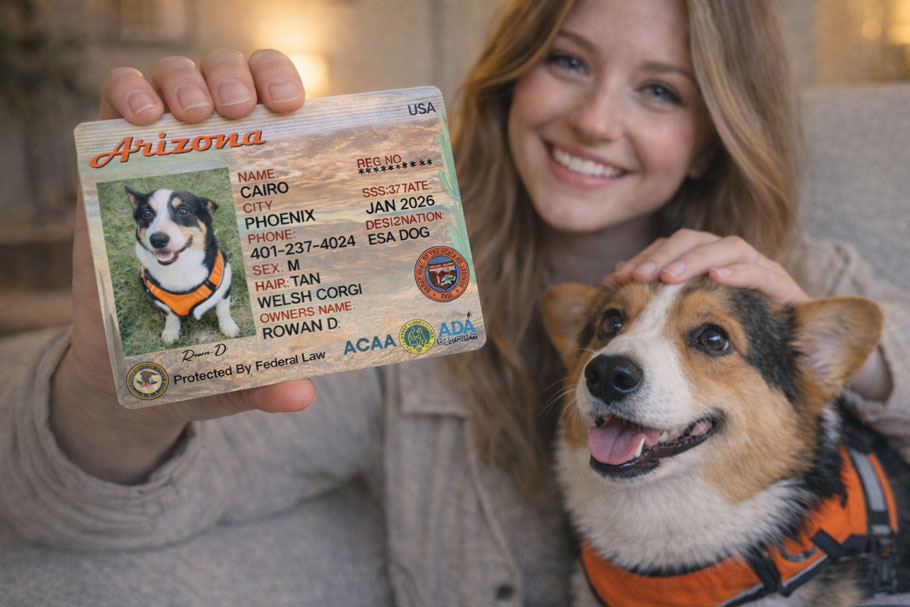
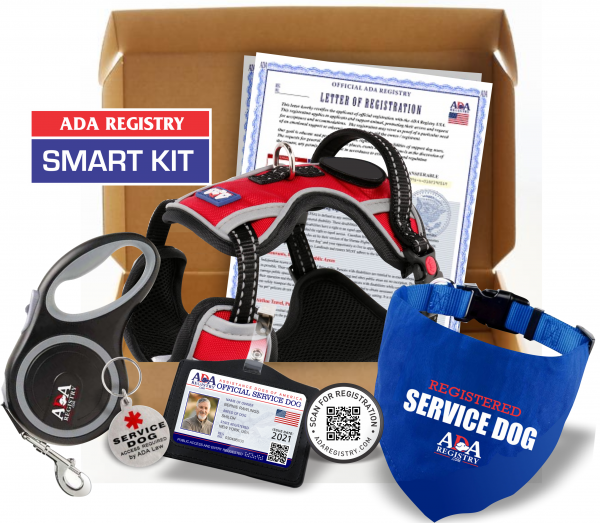
Avoid misleading “ESA registration” claims
Be cautious about third-party “registrations” that promise legal status. For most people, the correct path is: (1) keep rabies vaccination current, (2) maintain your dog license in Delaware, and (3) use appropriate documentation for housing accommodations when applicable.
Frequently Asked Questions
Disclaimer: Licensing requirements and office locations may change. Residents should verify details with their local animal services office within Delaware.